
Walkable Neighborhoods in Conroe, TX: Where You Can Actually Walk
Quick Answer: Conroe's most walkable neighborhoods are Downtown Conroe (restaurants, shops along Main Street), The Woodlands Town Center (master-planned walkability, extensive trails), and select sections of Grand Central Park (internal walkability within development). Walk Scores range 45-70—"Somewhat Walkable" meaning some errands possible on foot but cars are still essential. Texas heat, sprawling development patterns, and limited sidewalk infrastructure mean walkability serves lifestyle enhancement rather than car-free living. Best for buyers wanting occasional walking convenience, not urban-style pedestrian dependency.
Walkability in Conroe requires recalibrating expectations. This isn't downtown Austin or Houston's Montrose—neighborhoods where residents walk daily for work, groceries, and entertainment. As detailed in Conroe City Guide: Everything You Need to Know, Conroe follows suburban Texas patterns: car-dependent infrastructure with pockets of walkable amenity access. Understanding this reality prevents disappointment when "walkable" neighborhoods still require vehicles for most activities.
Defining Walkability: Conroe's Reality vs. Urban Standards
Walk Score rates most Conroe at 35-50 ("Car-Dependent" to "Somewhat Walkable"). Even "walkable" areas reach only 60-70—below thresholds where walking replaces driving for daily life. Texas heat compounds challenges: 95-100°F summer days from June-September make walking uncomfortable for all but morning/evening hours.
Downtown Conroe: Historic Core Walkability
Downtown Conroe along Main Street and Metcalf Street offers the city's most authentic walkable district. Historic buildings house restaurants, shops, Conroe City Hall, and entertainment venues. Residential options include loft conversions, townhomes, and single-family homes within 3-4 blocks of Main Street. Pricing ranges $250,000-$450,000 depending on property type and condition.
Downtown Walking Distance (5-10 Minutes)
- Main Street dining—8-10 restaurants including Margarita's Mexican Restaurant, The Toasted Yolk, local cafes
- Conroe City Hall—municipal services, public meetings
- Crighton Theatre—performing arts venue, community events
- Heritage Museum of Montgomery County—local history, exhibits
- Downtown parks—Central Park, small pocket parks
- Retail shops—boutiques, antiques, local businesses
Downtown Conroe Advantages
- True walkability—restaurants, entertainment, services concentrated within blocks
- Community events—farmers markets, festivals, holiday celebrations on Main Street
- Historic character—older architecture, established neighborhood feel
- Lower pricing—$250,000-$450,000 versus $400,000+ in The Woodlands
- Authentic urban fabric—not master-planned; organic downtown development
Downtown Limitations
- Limited options—8-10 restaurants exhaust quickly; variety lower than The Woodlands
- Parking challenges—street parking competitive during events, limited residential driveways
- Noise and activity—living downtown means traffic, events, late-night activity
- Older housing—many properties need updates, maintenance more intensive
- Still requires car—groceries, major retail, work commutes need vehicles

The Woodlands Town Center: Master-Planned Walkability
The Woodlands Town Center represents Texas-style master-planned walkability. This mixed-use district includes office towers, hotels, restaurants, retail, and high-density residential (condos, apartments). Market Street provides pedestrian-focused shopping and dining. Extensive trail system connects residential villages to Town Center and throughout the 28,000-acre community. Pricing: $400,000-$900,000+ for condos/townhomes near Town Center.
For comprehensive details, see Living in The Woodlands Hills: Complete Guide. The Woodlands delivers suburban walkability—trails, parks, and amenities accessible on foot—but within a car-dependent framework requiring driving for work, major shopping, and activities outside the community.
The Woodlands Advantages
- Extensive trail system—walk/bike to parks, Town Center, neighbors without streets
- Dining variety—50+ restaurants within The Woodlands, many walkable via trails
- Year-round programming—concerts, festivals, farmers markets provide walking destinations
- Top-rated schools—walkable for many neighborhoods via trails
- Safe pedestrian infrastructure—trails separated from roads, well-maintained
The Woodlands Trade-Offs
- Premium pricing—$400,000-$900,000+ for walkable Town Center proximity
- HOA fees—$600-$1,200+ annually for amenities, trail maintenance
- Internal traffic—The Woodlands roads congested during peak hours despite walkability
- Suburban sprawl—community covers 28,000 acres; only Town Center truly walkable
- Still car-dependent—work commutes, major shopping require driving
Grand Central Park: Internal Neighborhood Walkability
Grand Central Park, a newer master-planned development in Conroe proper, offers internal walkability—trails, parks, and amenities within the community. Unlike The Woodlands' extensive system, Grand Central Park focuses on neighborhood-scale walkability: parks, pools, playgrounds accessible on foot from homes. External destinations (restaurants, retail, work) require driving. Homes range $320,000-$550,000.
Grand Central Park Walkable Features
- Internal trail system—connects neighborhoods to parks, pools, amenity centers
- Multiple parks—playgrounds, sports fields, open space within walking distance
- Amenity centers—pools, fitness facilities, clubhouses walkable for residents
- Sidewalk infrastructure—all streets include sidewalks, pedestrian-friendly design
- Future commercial—planned retail within development (not yet built as of 2025)
Grand Central Park Benefits
- Neighborhood walkability—kids walk to parks, neighbors connect via trails
- New construction—modern homes, energy efficiency, builder warranties
- Lower than Woodlands—$320,000-$550,000 versus $400,000-$900,000+ Town Center
- Community amenities—pools, parks, events create neighborhood cohesion
Grand Central Park Limitations
- Internal walkability only—no external walking destinations (restaurants, shops, entertainment)
- HOA fees—$800-$1,200 annually for amenities, landscaping
- Commercial undeveloped—planned retail not built; all shopping requires driving
- New development—construction activity, infrastructure maturing through 2026+
What You Can't Walk To in Conroe
Even Conroe's most walkable neighborhoods require cars for essential activities. Understanding these limitations prevents unrealistic expectations:
Always Requires Driving
- Groceries—H-E-B, Kroger, Walmart all require driving. Carrying full shopping loads in Texas heat impractical even if technically within walking distance.
- Work commutes—Unless employed in Downtown Conroe or The Woodlands Town Center (rare), Houston commutes require vehicles.
- Healthcare—Doctor appointments, urgent care, pharmacies all require driving 5-15 minutes minimum.
- Major retail—Target, Home Depot, big-box stores necessitate vehicles.
- Children's activities—Sports practices, lessons spread across the region; driving required.
- Entertainment beyond local—Movies, bowling, major venues require driving to The Woodlands or Houston.
Seasonal Walkability: Texas Heat Reality
Texas weather dramatically limits walkability utilization. Many buyers envision pleasant evening walks, but annual patterns reveal different reality:
Monthly Walkability Patterns
- March-May, October-November (peak seasons): Pleasant temperatures (70-85°F), residents walk regularly. Walkability delivers maximum value these 5-6 months.
- June-September (summer): Heat (95-105°F), humidity make daytime walking miserable. Walking limited to early morning/evening. AC-dependent lifestyle dominates.
- December-February (winter): Mild but variable (40-70°F). Rain is more common, cold fronts discourage walking. Usage is moderate compared to spring/fall.
Over a full year, walkability matters intensely 5-6 months, moderately 3-4 months, minimally 3-4 months. Premium pricing for walkable locations delivers benefits primarily spring and fall.
Walkability for Different Buyer ProfilesEmpty Nesters and Retirees
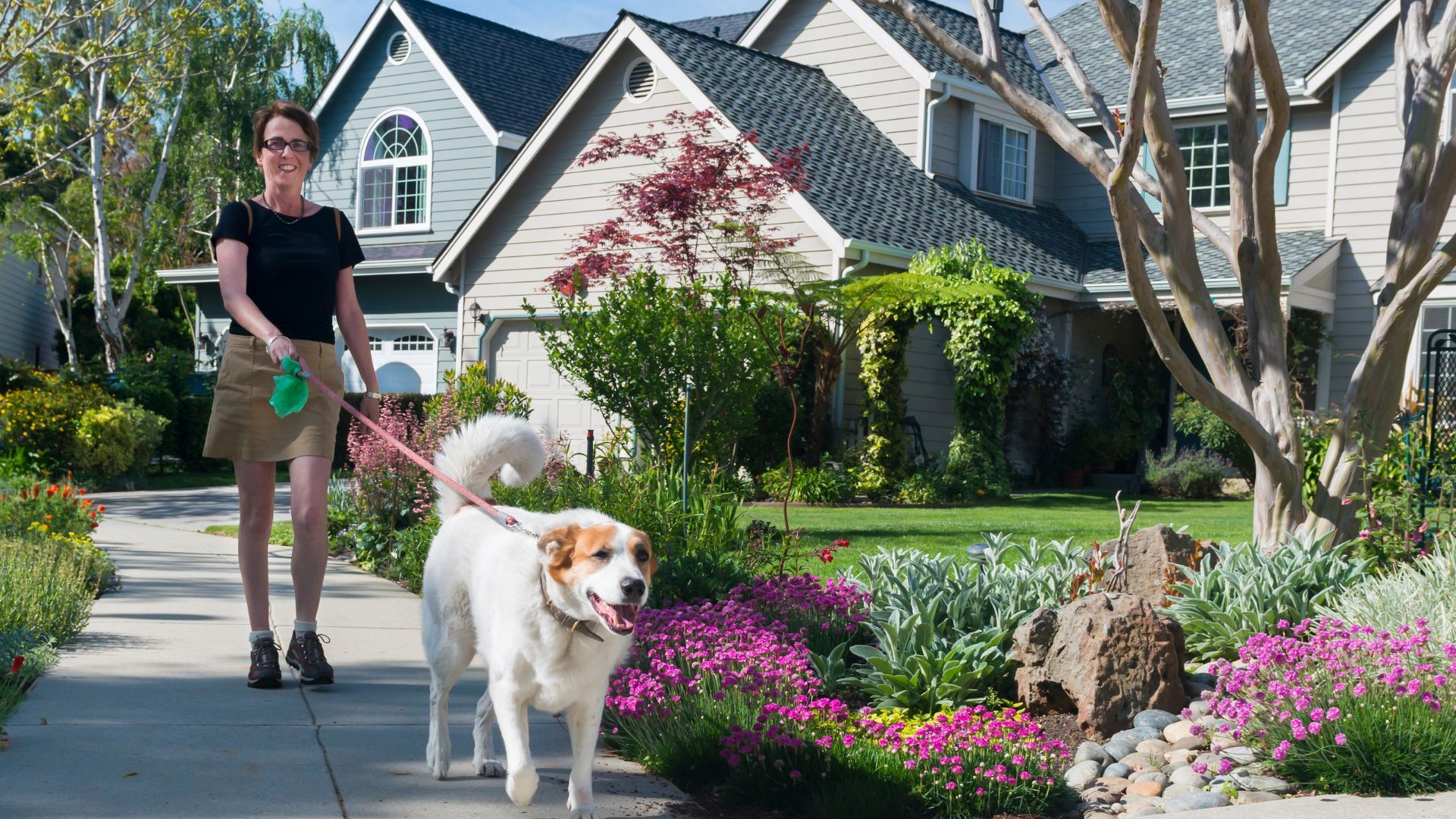
This group values and uses walkability most consistently. Downtown Conroe or The Woodlands Town Center work well—regular walks to dining, events, shopping within communities. However, medical appointments and major shopping still require driving.
Young Professionals
As explored in Young Professional Areas in Conroe, walkability needs depend on work location. Remote workers appreciate walkable coffee shops (limited in Conroe outside The Woodlands). Traditional commuters rarely use neighborhood walkability—early departures, late returns limit walking opportunities.
Families with Children
Families use walkability selectively. Kids walk to neighborhood parks (valuable daily use). Walking to restaurants requires managing heat, strollers, logistics. Best Family Neighborhoods in Conroe prioritize schools and safety over walkability—most family errands require driving regardless.
Families with Teens
Teenagers gain independence from walkable locations. The Woodlands or Downtown Conroe let teens walk to restaurants, shops without parental driving. However, teen activities (sports, jobs, social events) are mostly outside walking range.
Decision Framework: Is Walkability Worth the Premium?
Choose Walkable Neighborhoods If You:
- Walk regularly for recreation and genuinely enjoy it—not theoretical preference
- Will use walkability 2-3+ times weekly spring and fall—occasional users don't justify premiums
- Are empty nesters or retirees with flexible schedules
- Have teens needing independent access to activities
- Value community connection from walking to events, markets, restaurants
- Accept walkability enhances lifestyle but doesn't replace car ownership
Skip Walkability Premiums If You:
- Rarely walk recreationally even in walkable areas—behavior patterns persist
- Have Houston commutes requiring early departures, late returns—limited time to use walkability
- Prioritize yard space, home square footage over location—Most Affordable Areas in Conroe offer better value
- Budget-conscious—can't justify $100,000-$200,000 premiums for occasional-use features
- Heat-sensitive—summer discomfort will prevent walking 4-5 months annually
Testing Walkability Before Buying
Don't trust Walk Scores or marketing. Test personally:
- Walk target routes multiple times—time walks from properties to destinations. Does distance feel reasonable or burdensome?
- Test in summer heat—walk the same routes at 3 PM in July. Still appealing at 98°F?
- Count actual destinations—how many restaurants, shops are accessible? Sufficient for regular use or exhausted quickly?
- Assess sidewalk quality—gaps, cracks, shade coverage? Will you walk confidently year-round?
- Visit different times—weekday morning, weekend afternoon, evening. Does the neighborhood feel comfortable walking all the time?
Alternative Walkability Strategies
If Conroe's walkable neighborhoods don't justify premiums, consider alternatives:
- Prioritize trail access over commercial walkability: Many affordable neighborhoods near Lone Star Hiking Trail or local parks offer recreation walking without premium pricing
- Choose near Lake Conroe: Waterfront recreation replaces walking to commercial destinations
- Focus on neighborhood design: Subdivisions with internal trails, pocket parks provide walking without external commercial access
- Consider Conroe Suburbs Guide options: Shenandoah offers small-town walkability at lower premiums than The Woodlands
Working with Love's Pro Moving & Storage Company
Whether relocating to walkable Downtown Conroe, moving to The Woodlands Town Center for master-planned trails, or choosing Grand Central Park's neighborhood walkability, Love's Pro Moving & Storage Company understands Conroe's diverse community characteristics. We navigate parking challenges in downtown areas, coordinate with the City of Conroe for permits, and manage transitions into both urban-style neighborhoods and master-planned communities with HOA requirements.
Our team knows which walkable areas have access restrictions, which streets require special parking coordination, and how to efficiently handle moves into neighborhoods where pedestrian activity and limited street parking create logistics challenges. We coordinate timing around your schedule and ensure smooth relocations whether you're moving from Houston, within Conroe, or from out of state.